Digital transformation isn’t just for Fortune 500 companies anymore. If you’re running a local service business, whether you’re handling home repairs, landscaping, cleaning services, or any hands-on work, you’re competing in a dramatically different marketplace than existed even five years ago. Local Service Businesses Can Leverage Digital Transformation. The businesses that understand this shift are capturing market share at unprecedented rates, while those clinging to traditional approaches watch their customer base slowly erode.

I’ve worked with dozens of local service providers navigating this transition, and the pattern is consistent: businesses that embrace strategic digital transformation don’t just survive, they dominate their local markets. The difference isn’t about having the biggest marketing budget or the most technical expertise. It’s about understanding how customers find, evaluate, and choose service providers today, then building your digital presence to align with those behaviors.
Understanding the New Customer Journey
The way people hire local service providers has undergone a fundamental change. Twenty years ago, customers found businesses through phone book ads, referrals, or driving past storefronts. Today, that journey begins online, specifically, on search engines and review platforms.
Consider how this plays out in practice. A homeowner realizes they need help clearing accumulated items from their garage. Their first action isn’t calling companies from memory or asking neighbors anymore. They immediately grab their phone and search for something like “junk removal near me” or “junk removal in [city name].” Within seconds, they’re presented with multiple options, including reviews, pricing information, and availability.

This shift creates both challenge and opportunity. The challenge? If your business doesn’t appear in those search results, you’re effectively invisible to customers actively seeking your services right now. The opportunity? Strategic digital presence allows even small businesses to compete effectively against larger, more established competitors.
The Foundation: Local SEO That Actually Works
Local search engine optimization represents the cornerstone of digital transformation for service businesses. When executed properly, local SEO ensures your business appears prominently when potential customers search for your services in your geographic area.
Start with Google Business Profile optimization, this free tool from Google dramatically impacts local search visibility. A complete, accurate profile with verified information, high-quality photos, service descriptions, and regular updates signals to Google that your business is legitimate, active, and relevant for local searches.
But here’s what most businesses miss: optimization doesn’t end with setting up your profile. Ongoing management matters enormously. Businesses that regularly update their profiles with posts, respond promptly to reviews, and maintain accurate service information consistently outrank competitors with outdated profiles.
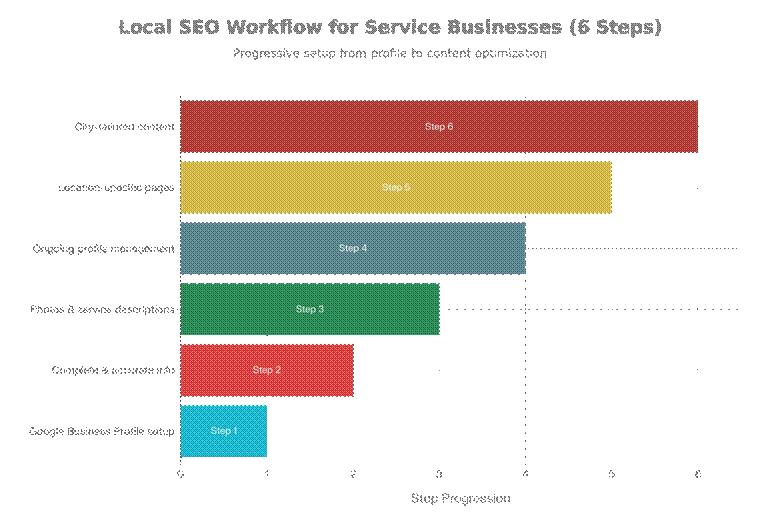
Beyond Google Business Profile, your website itself must be optimized for local search. This means creating location-specific pages that provide genuine value to visitors while signaling geographic relevance to search engines. Generic “we serve the entire region” pages don’t cut it anymore. Strategic businesses create dedicated pages for each service area they target.
For example, a junk removal company serving the Bay Area shouldn’t have one generic page. They should have distinct pages for each major service area—a dedicated page for junk removal services in Santa Clara, another specifically for junk removal in Livermore, and so on for each city they serve. Each page should address the specific needs, regulations, and characteristics of that particular location.
Building Digital Trust at Scale
Trust has always mattered in service businesses. What’s changed is how customers evaluate trustworthiness. Previously, trust came from personal recommendations or years of visible presence in a community. Today, trust gets built (or destroyed) through online reviews, website professionalism, and digital reputation.
Online reviews function as social proof at scale. A potential customer can read dozens of experiences from past customers in minutes, forming judgments about your reliability, quality, and customer service before ever contacting you. This makes active review management non-negotiable for service businesses serious about growth.
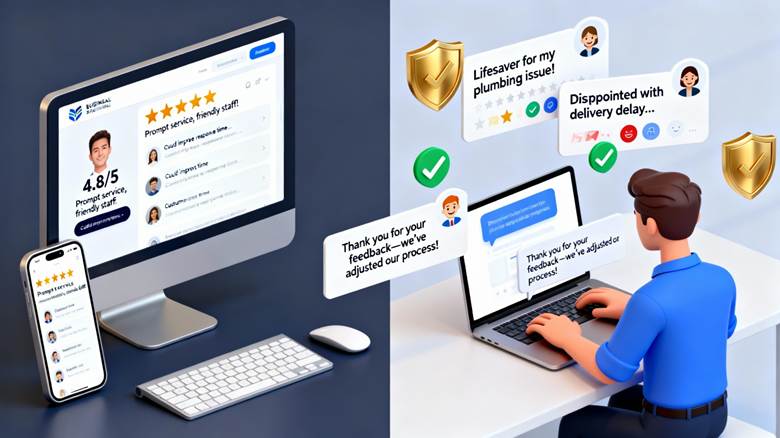
However, review management goes far beyond asking satisfied customers to leave reviews (though you should absolutely do that systematically). It requires responding to all reviews—positive and negative—in ways that demonstrate professionalism and customer focus.
Negative reviews, handled well, can actually strengthen your reputation. When potential customers see you acknowledging problems, taking responsibility, and making things right, they gain confidence that you’ll treat them fairly if issues arise. Conversely, ignoring negative reviews or responding defensively signals that you don’t value customer satisfaction.
Content Marketing for Service Businesses
Many local service providers dismiss content marketing as something only e-commerce companies or consultants need. This represents a massive missed opportunity. Strategic content marketing positions your business as the trusted expert customers turn to for information, even before they’re ready to make purchase decisions.
Think about the questions customers ask before hiring your type of service. What concerns do they have? What problems are they trying to solve? What misconceptions do they hold? Each of these represents content opportunities that can attract potential customers through search while building your authority.
A junk removal company, for instance, could create valuable content about topics like decluttering strategies, estate cleanout planning, understanding disposal regulations, recycling options, cost factors that affect pricing, or how to prepare for professional junk removal. Each piece addresses real customer concerns while incorporating relevant keywords that improve search visibility.
Systematic Customer Acquisition
Digital transformation enables systematic, predictable customer acquisition in ways traditional marketing never could. Rather than sporadically placing ads and hoping for results, digital strategies create measurable, optimizable systems that deliver consistent leads.
Each funnel stage requires different tactics. Awareness comes from search visibility, social media presence, and content marketing. Consideration happens through your website content, reviews, and educational resources. Conversion depends on clear calls-to-action, easy contact methods, and responsive communication.
Many service businesses focus exclusively on bottom-funnel tactics—trying to convert people already ready to buy. This approach limits growth because it ignores the larger market of people who will need your services eventually but aren’t ready right now. Strategic businesses build systems that capture attention at all funnel stages, nurturing prospects over time rather than only chasing immediate sales.
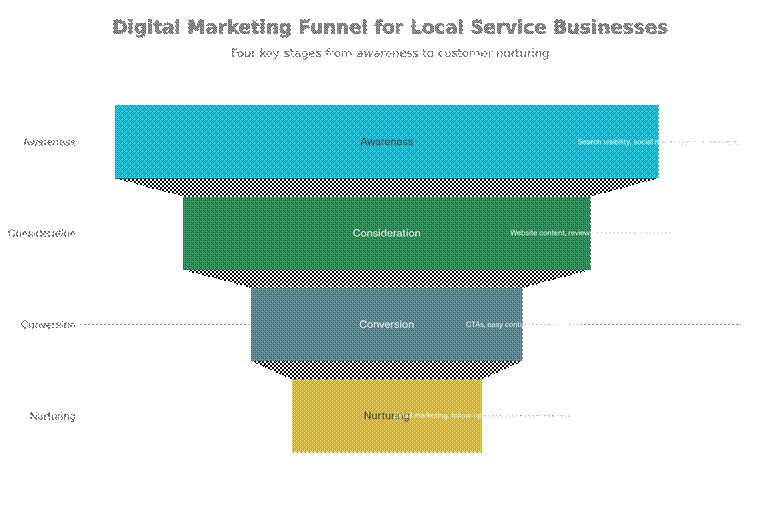
Email marketing exemplifies this nurturing approach. When you capture email addresses from website visitors (through valuable content offers, service estimates, or newsletter signups), you create opportunities for ongoing communication
Mobile-First Is No Longer Optional
Over 60% of local searches now happen on mobile devices, and that percentage continues climbing. For service businesses, this mobile dominance has profound implications that many still don’t fully grasp.
Mobile users have different behaviours and expectations from desktop users. They’re often searching while actively dealing with a problem, standing in a cluttered garage, looking at a broken appliance, or noticing a service need.
Mobile optimization means more than just responsive design (though that’s essential). It requires rethinking content hierarchy to prioritize what mobile users need most. Phone numbers should be one-tap clickable. Service areas should be immediately clear. Basic information about what you do, where you serve, and how to contact you must be accessible within seconds of landing on your site.
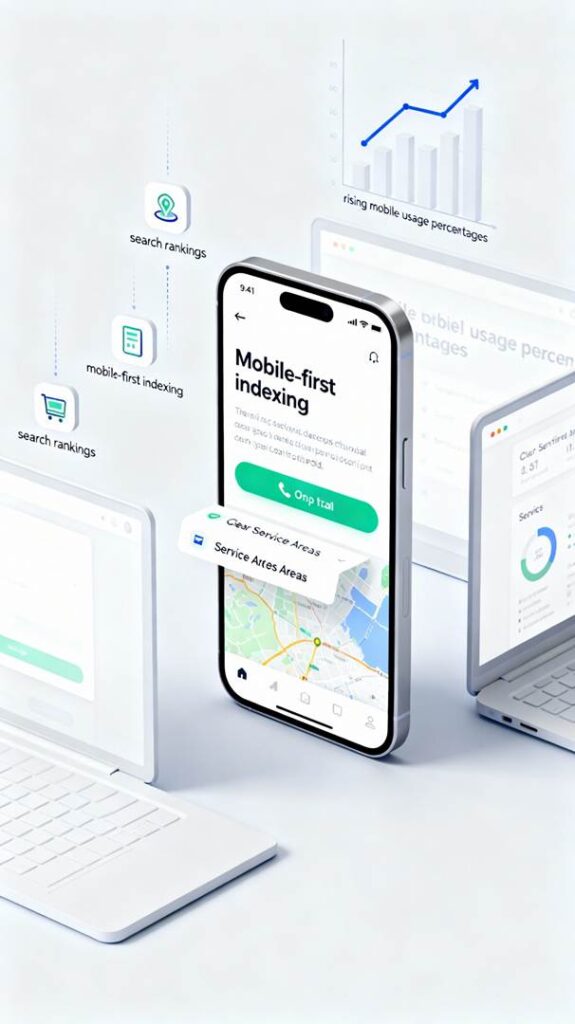
Google’s mobile-first indexing means the search engine primarily uses your mobile site for ranking and indexing. If your mobile experience is poor, your search rankings suffer regardless of how good your desktop site is. This isn’t a future concern; it’s a current reality affecting your business today.
Competitive Intelligence and Market Positioning
Digital transformation provides unprecedented access to competitive intelligence that was impossible to gather in pre-Internet eras. Understanding how competitors position themselves, what services they emphasize, how they price, and how customers review them informs smarter strategic decisions.
This isn’t about copying competitors, it’s about identifying market gaps and positioning opportunities. Maybe competitors focus exclusively on residential services, leaving commercial opportunities underserved. Perhaps they emphasize the lowest cost, while you can differentiate on reliability and quality. Competitive analysis reveals these opportunities so you can intentionally position your business in ways that stand out.
Online review analysis provides particularly valuable insights. Read reviews of your competitors, paying attention to what customers praise and what frustrates them. Common complaints about competitors represent opportunities to differentiate your service.
The Technology Stack Service Businesses Actually Need
At minimum, you need: a mobile-optimized website that clearly explains your services and makes contacting you easy, an optimized Google Business Profile that’s regularly maintained, a system for generating and managing online reviews, a way to capture and nurture leads (email marketing platform), and basic analytics to understand what’s working.
Beyond these basics, consider customer relationship management (CRM) software designed for service businesses. Simple CRMs help you track leads, schedule follow-ups, and ensure no potential customer falls through the cracks. The right CRM pays for itself many times over through improved conversion rates and customer retention.
Many service businesses resist technology adoption, viewing it as complicated or unnecessary. This resistance becomes increasingly costly as competitors embrace tools that improve efficiency and customer experience. You don’t need to become a technology company, but you do need to use technology strategically to compete effectively.
Measuring What Matters
Digital marketing’s measurability represents one of its greatest advantages over traditional approaches. Rather than placing ads and hoping for results, you can track exactly what’s working, what’s not, and optimize accordingly.
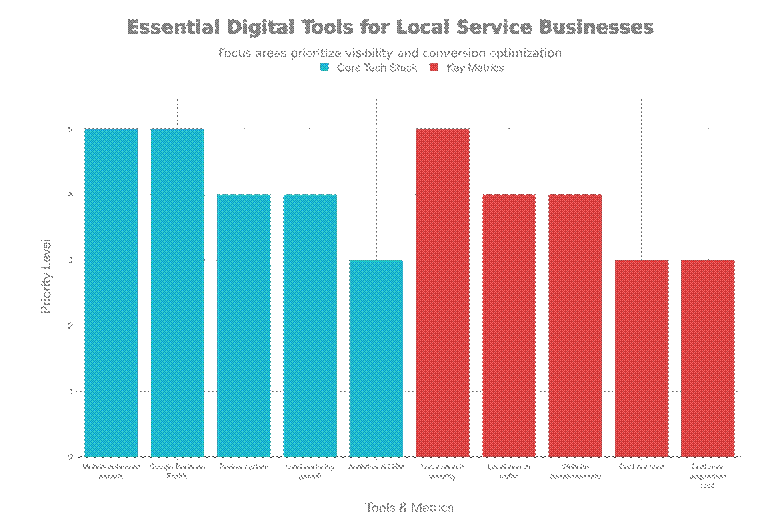
However, tracking everything leads to analysis paralysis. Focus on metrics that actually correlate with business growth. For local service businesses, critical metrics include organic search visibility (rankings for relevant local searches), website traffic from local searches, conversion rate (percentage of website visitors who contact you), cost per lead, and customer acquisition cost.
Set up simple dashboards that let you monitor key metrics monthly without drowning in data. Google Analytics and Google Search Console provide the most essential data for free. Review these metrics regularly to identify trends and opportunities for improvement.
Taking the First Steps
Digital transformation can feel overwhelming, especially for business owners focused on daily operations. The key is starting somewhere rather than trying to do everything simultaneously.
Begin with the foundations: claim and optimize your Google Business Profile, ensure your website is mobile-friendly with clear contact information, and implement a system for requesting reviews from satisfied customers. These basics deliver outsized impact relative to effort required.
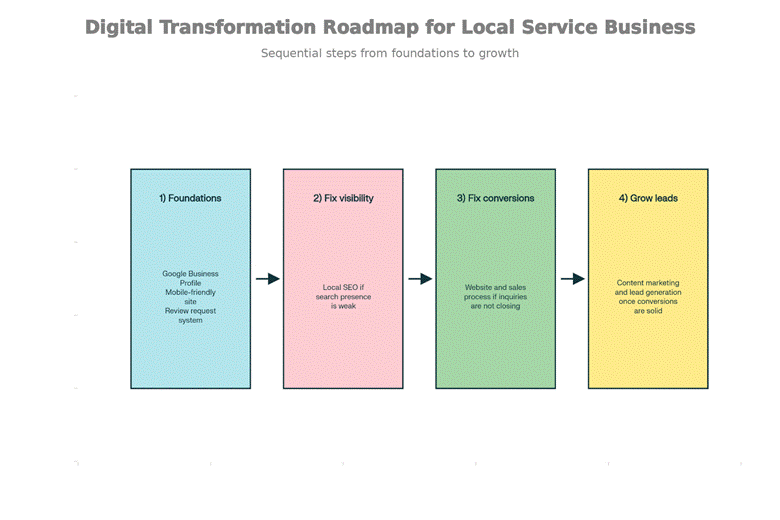
From there, prioritize based on your specific business situation. If you’re invisible in search results, local SEO deserves immediate attention. If you get plenty of inquiries but low conversion rates, focus on website optimization and sales process improvement. If you convert well but don’t generate enough leads, invest in content marketing and lead generation.
Digital transformation isn’t about abandoning what makes your service business successful—your expertise, quality work, and customer relationships. It’s about ensuring potential customers discover those strengths rather than never learning you exist. In a marketplace where visibility determines viability, digital transformation has moved from competitive advantage to survival necessity.